
Sicily—the sun-kissed Italian island where history, culture, and breathtaking landscapes come together. Whether you dream of wandering through ancient Greek ruins, indulging in mouthwatering seafood, or lounging on pristine beaches, Sicily has something for everyone.
But here’s the question: Are you team Eastern Sicily, with its dramatic coastline, rich history, and Greek influences? Or does Western Sicily, with its raw authenticity, crystal-clear waters, and Arabic flavors, win your heart?
Let’s dive into the best of both sides so you can plan your dream Sicilian adventure!
Eastern Sicily: Where History and Elegance Collide
Eastern Sicily is a blend of ancient ruins, charming towns, and luxurious seaside escapes. This side of the island is home to stunning Baroque architecture, vibrant nightlife, and natural wonders.
Noto: A Baroque Gem
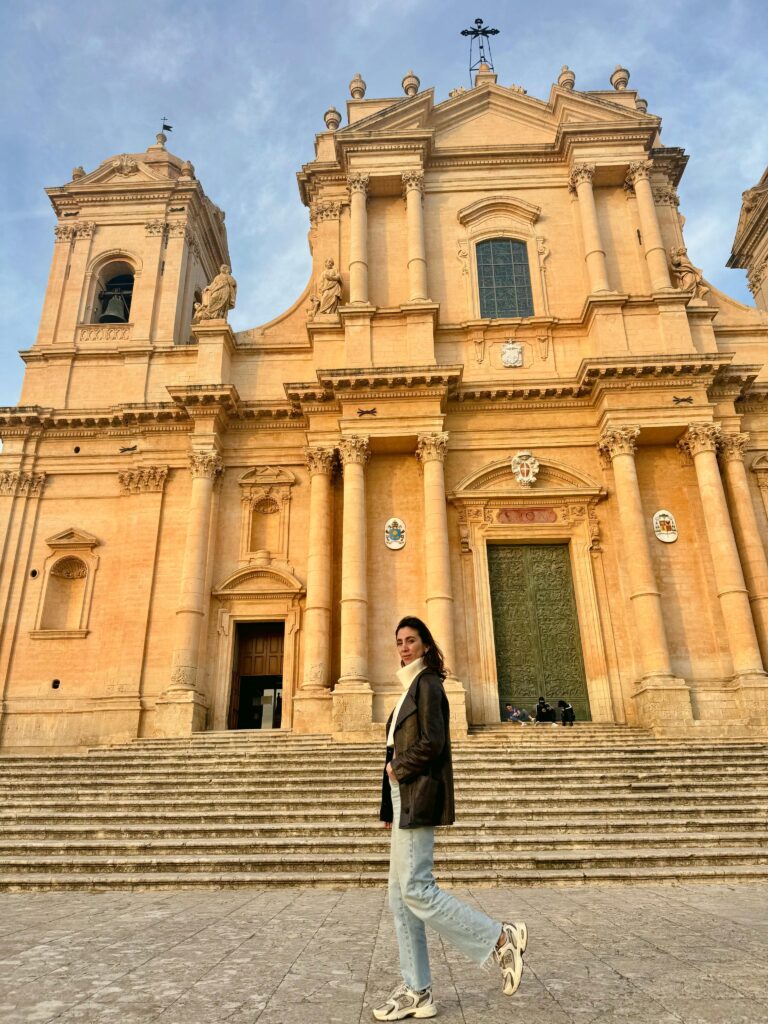
A UNESCO World Heritage Site, Noto is one of the most breathtaking towns in Sicily. Known as the “Baroque Capital,” its honey-colored stone buildings glow in the sunlight. Stroll through Corso Vittorio Emanuele, visit the Cathedral of San Nicolò, and sip an espresso in one of the charming piazzas.
Noto, with its charming ambiance, boasts stunning architecture, a testament to its rich history and the enduring allure of its Mediterranean climate. Nestled not far from Syracuse and Catania, it’s an ideal destination for those seeking respite from the bustling urban centers.
Experience the enchanting flower festival, a yearly spectacle that adds an extra layer of vibrancy to Noto’s already captivating atmosphere. From the intricate Baroque facades to the cultural festivities, Noto provides all the essentials for crafting an unforgettable journey to this picturesque Sicilian town.
Marzamemi: A Hidden Fishing Village
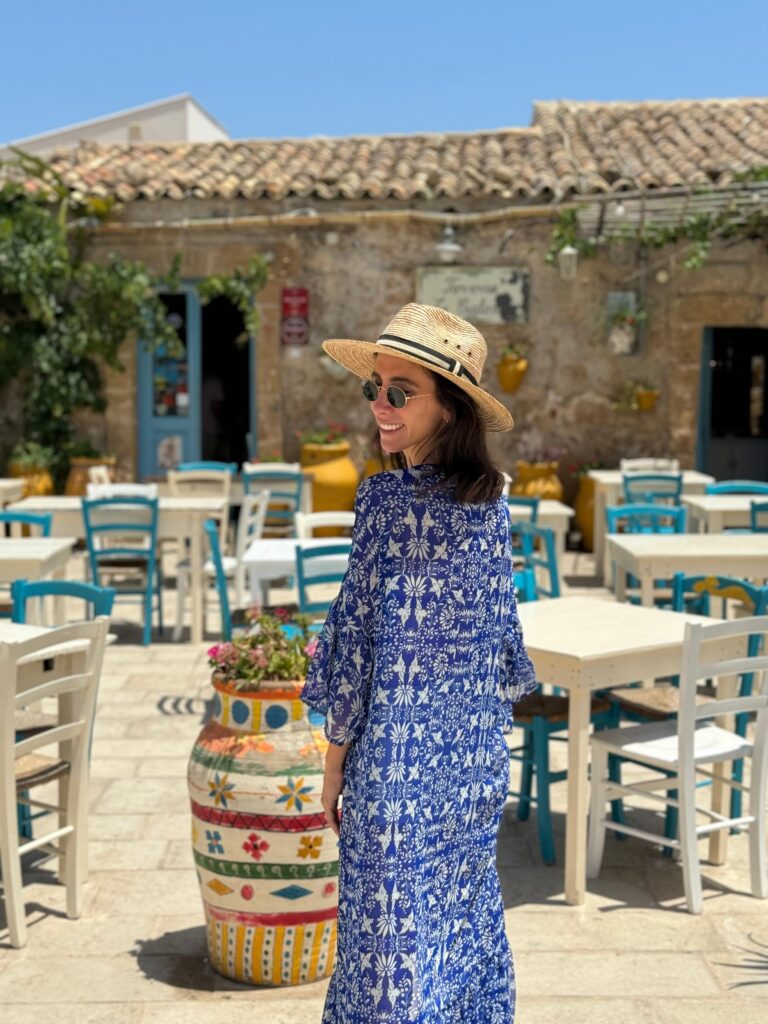
Marzamemi is a charming village, boasting vibrant colors, characteristic fishermen’s cottages, marinas, small islands, and an abundance of restaurants and clubs where you can savor the authentic taste of the sea, all while enjoying a breathtaking view of the Ionian Sea and its crystalline waters.
Among the highlights of Marzamemi are the Church of San Francesco da Paola, situated in the town’s central square, constructed in 1950, and Marzamemi’s tonnara, a structure of significant historical importance not only for the village but also for Sicily as a whole. In centuries past, this structure held paramount importance in the eastern region of the island.
Take a leisurely stroll through the quaint streets of Marzamemi and indulge in an aperitivo or a meal, whether amidst the charming streets or overlooking the seaside of this ancient fishing village
Mount Etna: Europe’s Largest Active Volcano
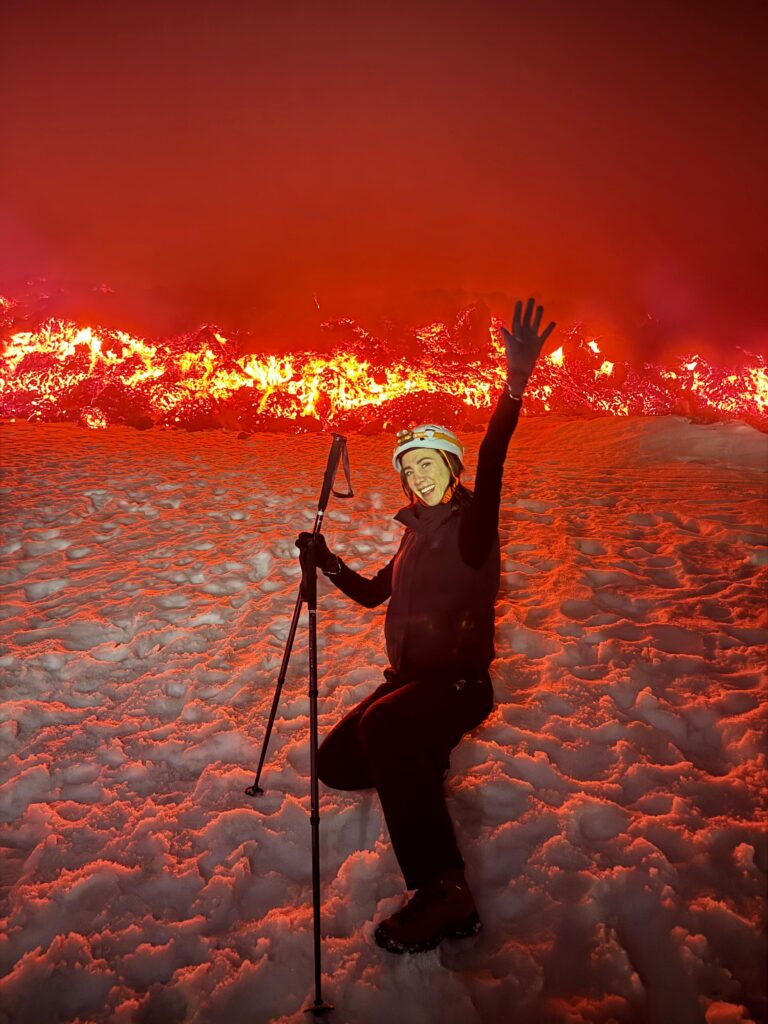
No trip to Eastern Sicily is complete without visiting Mount Etna. This fiery giant is not just a natural wonder but also a key player in the region’s winemaking scene. The volcanic soil produces unique, mineral-rich wines—so be sure to visit a local vineyard for a tasting!
Taormina: The Pearl of Sicily
Taormina, perched on a rocky promontory overlooking the Ionian Sea, is one of Sicily’s most renowned destinations. Its charming medieval streets, vibrant cultural scene, and the ancient Greek Theatre, which offers breathtaking views of Mount Etna, make it a magnet for tourists worldwide.
However, in my personal experience, certain attractions, like Isola Bella, did not meet my expectations. While Isola Bella is often celebrated for its picturesque setting, I found the beach to be overcrowded and not as pristine as anticipated. Additionally, some visitors have reported the beach being dirty, with rubbish scattered around. Despite these critiques, Taormina offers a wealth of experiences beyond its beaches.
Exploring the historic town center, with its array of shops, cafes, and restaurants, provides a rich cultural immersion. Attending performances at the ancient Greek Theatre or taking a cable car ride to enjoy panoramic views are just a few of the activities that showcase the town’s unique charm.
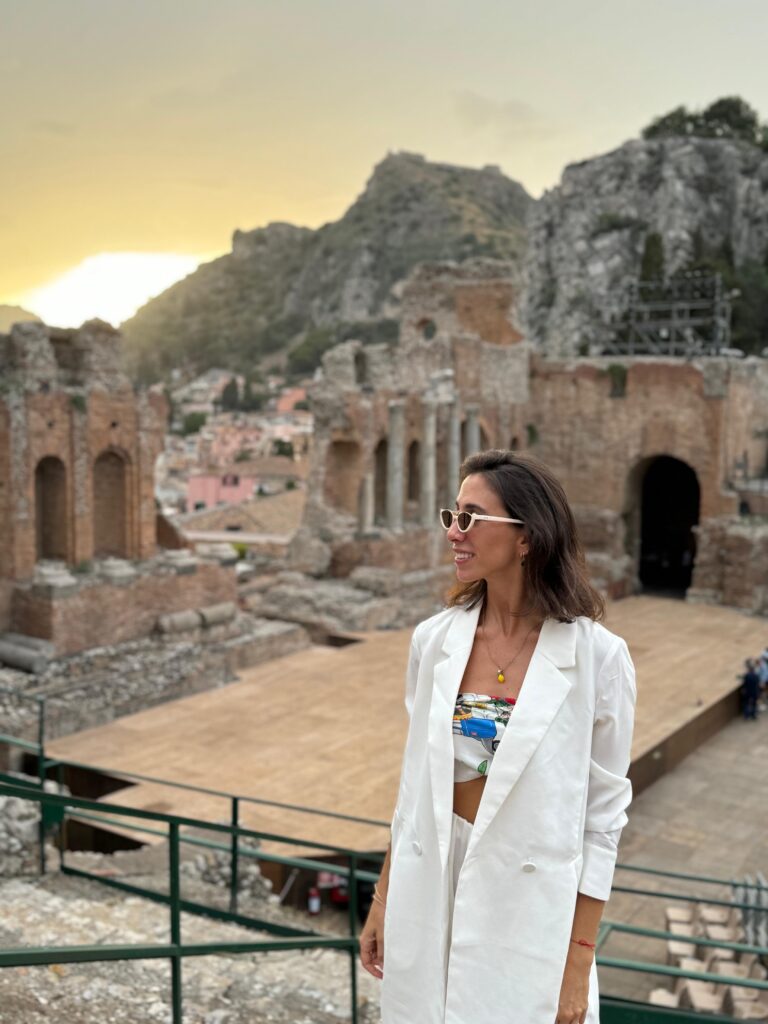
If luxury, romance, and stunning views are what you crave, Taormina is the place to be. Perched high on a cliff, this elegant town offers:
- The breathtaking Teatro Greco, an ancient amphitheater with panoramic sea views
- Chic boutiques and designer shops
- The most know beach: Isola Bella, or vulcanic beaches like Giardini Naxos, where you can also enjoy a boat experience.
Syracuse: Greek Ruins and Seaside Magic
Nestled in southeast Sicily, Syracuse is a wondrous ancient city, rich in history and architectural splendor, offering an array of activities that make it an ideal destination for a two-day exploration.
Founded by the Greeks in 734 B.C., Syracuse boasts breathtaking architecture and archaeological sites spanning centuries. At its zenith, it rivaled Athens in power and glory, earning Cicero’s praise as the “greatest and most beautiful of all Grecian cities.”
Important figures like Archimedes, Eschilo, and Platone hailed from Syracuse, leaving traces in iconic landmarks like the Teatro Greco, Tempio di Apollo, and the Fonte Aretusa of Ortigia.
The city witnessed a convergence of cultures with the Romans, Byzantines, and Arabs, each leaving an indelible mark. The 1693 earthquake left its scars, birthing the recognized ‘Sicilian Baroque’ style evident in the cityscape today.
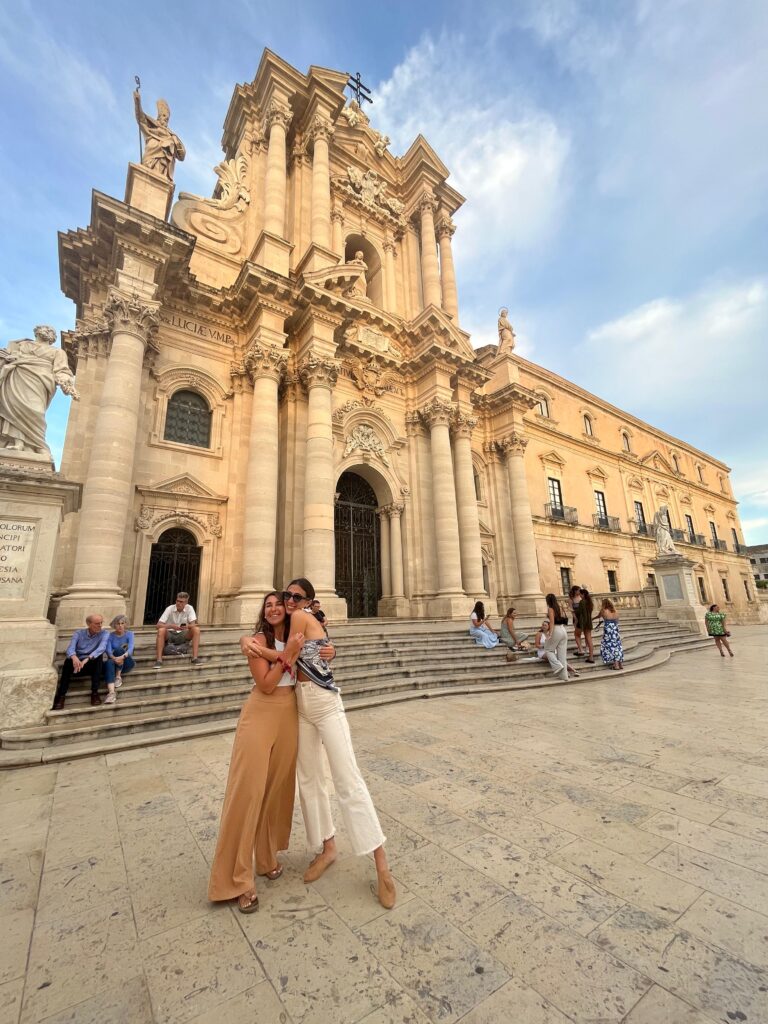
So history lovers, get ready to walk through the Neapolis Archaeological Park, explore the Ear of Dionysius, and wander through the charming streets of Ortigia, a tiny island full of character and charm.
Western Sicily: Wild, Authentic, and Full of Flavors
If you’re looking for something more rugged, laid-back, and truly Sicilian, head to the western side of the island. Here, you’ll find crystal-clear waters, Arabic-influenced cuisine, and some of the best local experiences.
San Vito Lo Capo: The Best Beach in Sicily
San Vito Lo Capo is renowned for its pristine white-sand beaches and crystal-clear waters.
The town’s vibrant culinary scene is highlighted by the annual Cous Cous Fest, a celebration of the region’s diverse gastronomy.
Beyond its beaches, visitors can explore the nearby Zingaro Nature Reserve, a haven for hikers and nature enthusiasts.
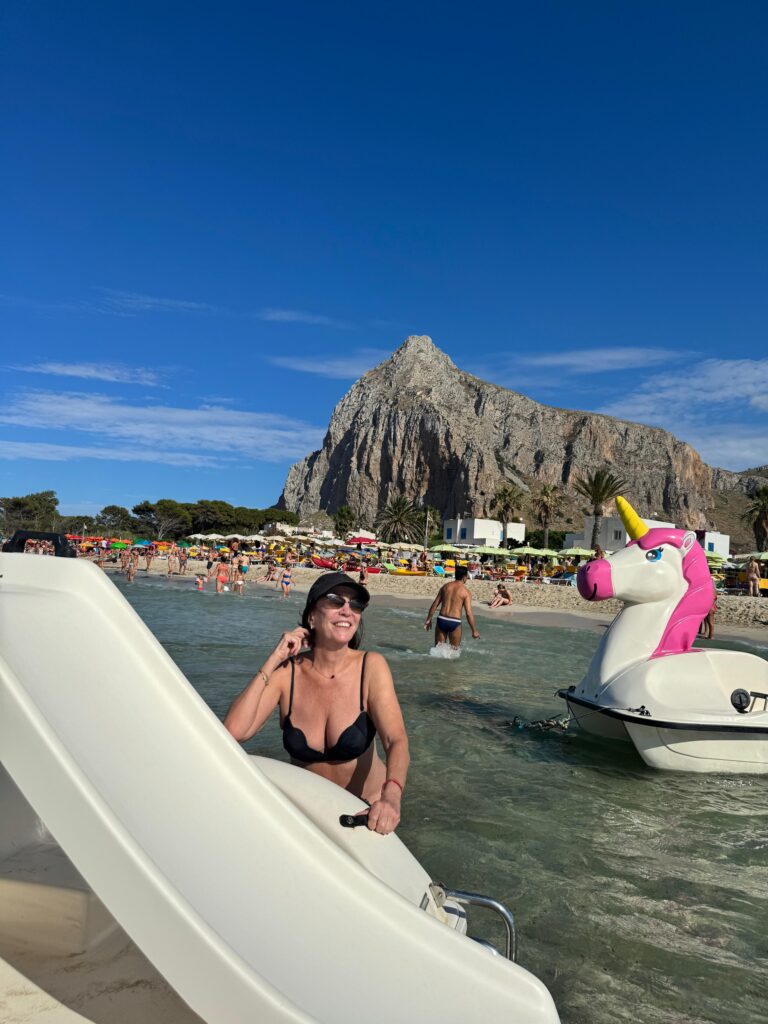
Think Caribbean vibes, but in Italy. San Vito Lo Capo is famous for its soft white sand and turquoise waters—one of the most beautiful beaches in all of Sicily!
Scopello: Hidden Coves and Cliffside Beauty
While we all know the name Scopello thanks to the iconic beach of the Faraglioni, Scopello is also the name of the small village that sits on the western coast of Sicily. It is a fraction of the municipality of Castellammare del Golfo, in the province of Trapani. It has just over a hundred inhabitants, but in the summer, the delightful village is populated by tourists, and its streets, usually silent in winter, come to life.
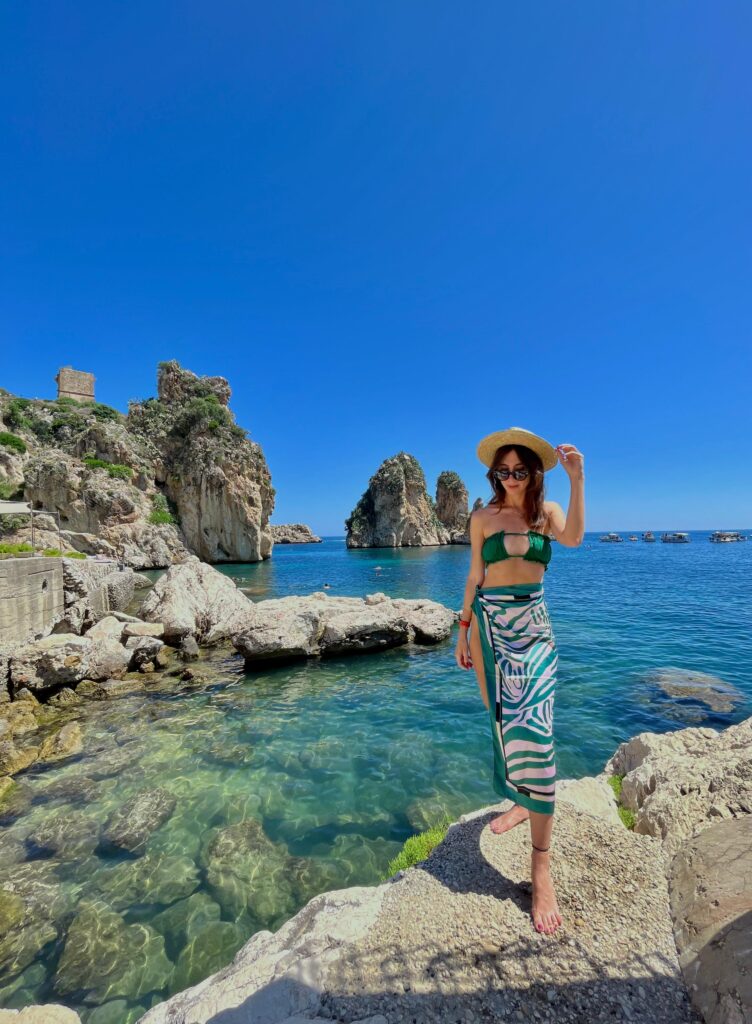
What to expect from Faraglioni Beach:
It’s not exactly a beach but rather a platform extending into the sea, where you’ll find lounge chairs and shade. Access to the beach costed €15 for regular admission and €10 for seniors until the summer of 2024. It’s advisable to wear flip-flops to enter the water as the seabed is rocky. It’s also a great spot for snorkeling. Inside, as mentioned earlier, the beach has a museum within the tonnara where you can learn about the history (included in the price).
Sicilian Street Food Heaven
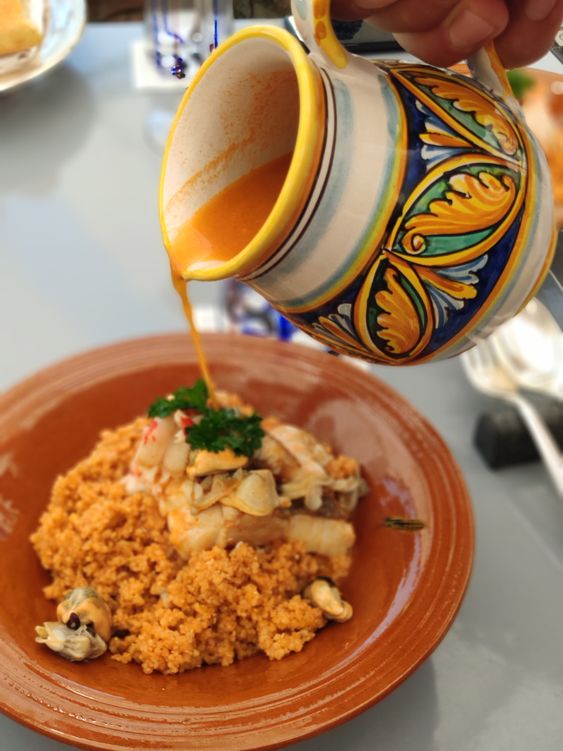
Western Sicily’s cuisine is a delicious mix of Sicilian and North African flavors. Must-try dishes include:
- Couscous di pesce – A fragrant seafood couscous with Arabic influence
- Arancini – Fried rice balls filled with ragu, mozzarella, or pistachio cream
- Panelle – Crispy chickpea fritters, perfect for a quick snack
Greek Ruins of Segesta & Selinunte
Western Sicily is home to some of the best-preserved Greek temples in the world.
- Segesta boasts a stunning, isolated temple surrounded by rolling hills.
- Selinunte is an ancient city with massive ruins spread across a breathtaking landscape.
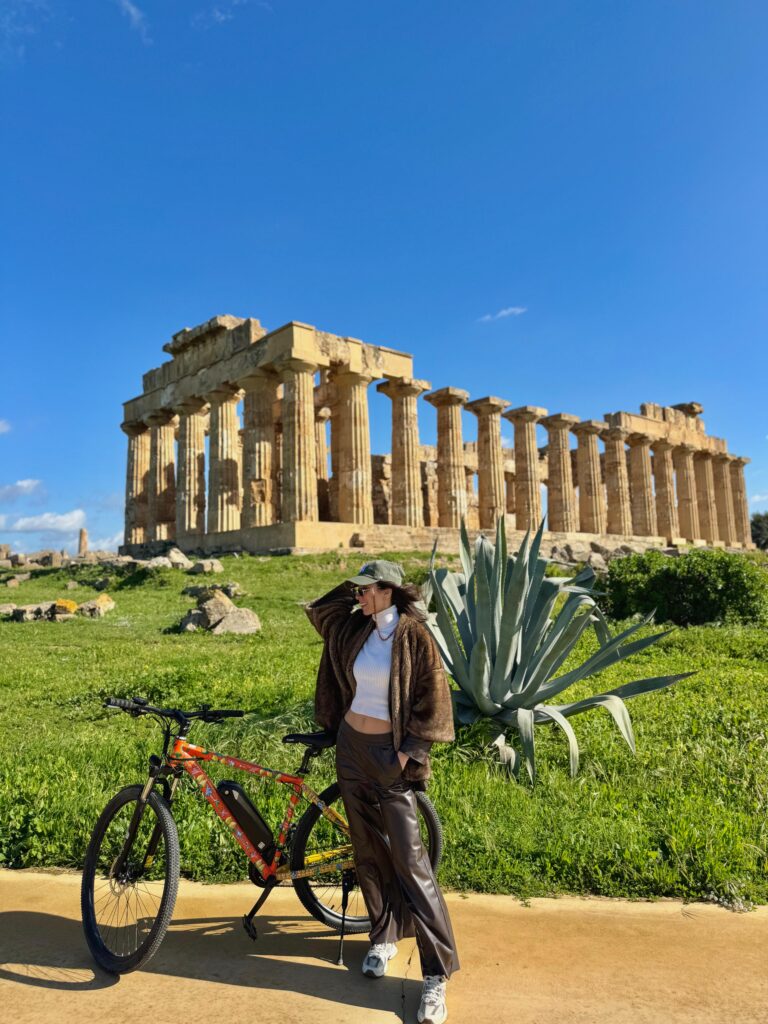
Selinunte was a thriving Greek colony founded in the 7th century BCE, located on Sicily’s southwestern coast. It boasts the largest archaeological park in Europe, featuring extensive ruins of temples, residential areas, and fortifications. The site is renowned for its impressive Temple of Hera and the Temple of Artemis, showcasing the grandeur of ancient Greek architecture. Visitors can explore the expansive ruins, providing a comprehensive understanding of the city’s historical significance.
Segesta, situated in the northwest of Sicily, was an ancient city of the Elymians, a pre-Greek civilization. The site is distinguished by the well-preserved Temple of Segesta, an unfinished Doric temple dating back to the 5th century BCE, and a theater offering panoramic views of the surrounding landscape. The temple’s construction remains a subject of scholarly debate, adding to the site’s intrigue.
Marsala: Sip Your Way Through Sicily
If you’re a wine lover, Marsala is your paradise. This town is famous for its fortified wine, a sweet and rich drink perfect for dessert. Visit a local winery to learn about its production and, of course, enjoy a tasting!
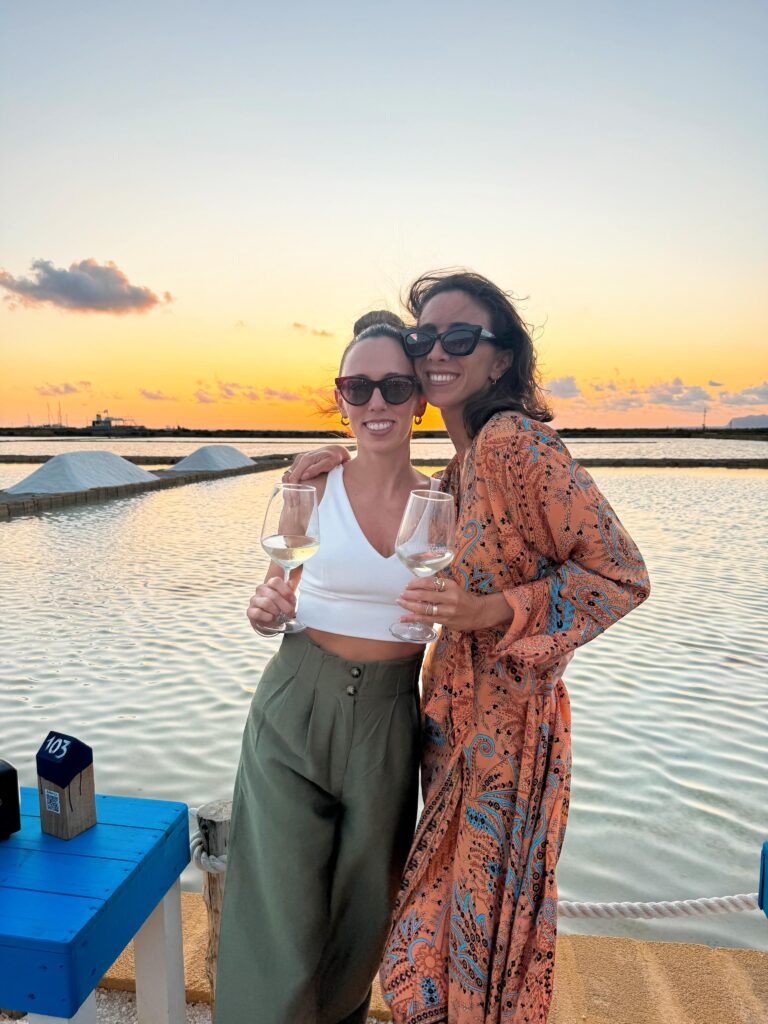
Marsala, located on Sicily’s western coast, is renowned for its rich history, stunning coastal landscapes, and the world-famous Marsala wine. The town’s origins trace back to the Carthaginian era, and it later became a significant Roman settlement. Today, visitors can explore its historic center, featuring charming streets, the impressive Marsala Cathedral, and the bustling Piazza della Repubblica.
The region is most famous for producing Marsala wine, a fortified wine that has been crafted since the 18th century. Wine enthusiasts can visit numerous wineries to learn about the production process and sample various vintages. Additionally, the nearby Stagnone Lagoon Nature Reserve offers opportunities for birdwatching, windsurfing, and exploring the ancient salt pans that have been in operation for centuries.
Salemi: The Hidden Gem
And last but not least, let’s not forget Salemi! With its historic stone streets, authentic local vibe, and unique experiences like CaliaFarm, this town offers an unforgettable taste of Sicilian culture.
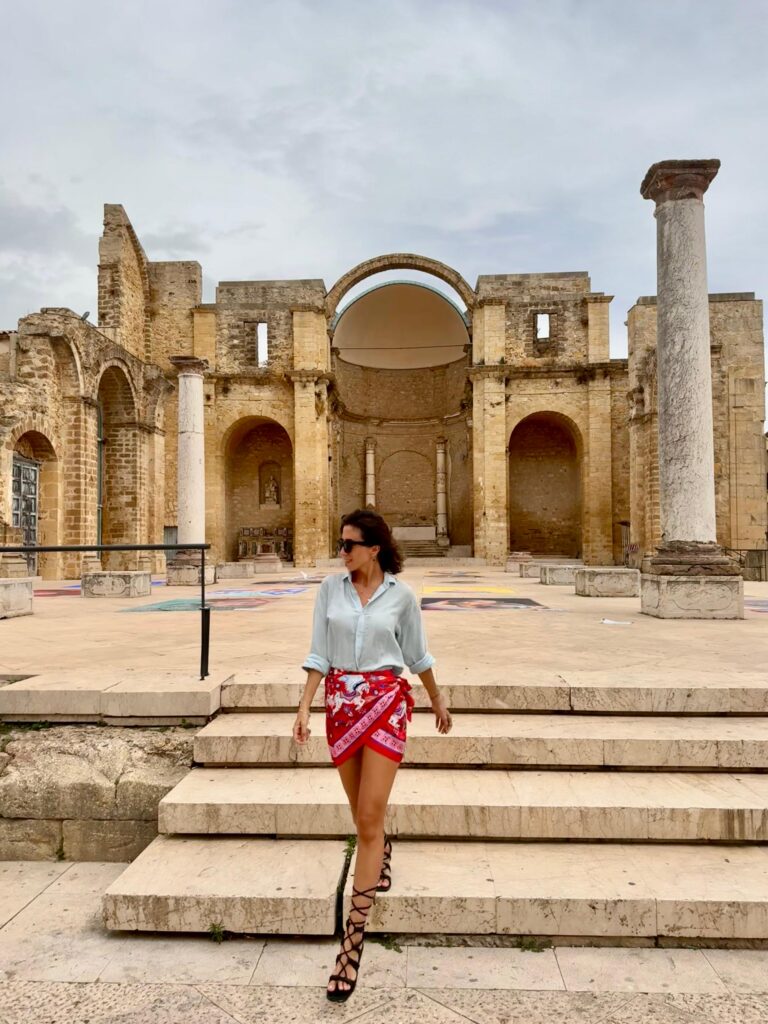
Salemi, located in the heart of Sicily, is a city of historical and cultural significance. Its centerpiece, the Castle of Salemi, is a testament to its rich past, with a history marked by various civilizations, particularly the Normans.
The entire city center is built from the durable and beautiful tufa stone, which adds a timeless charm to Salemi.
In recent years, Salemi has experienced a cultural resurgence, attracting scholars and artists. Its renewed focus on culture and history makes it an important city to discover in Sicily, offering a unique blend of the past and the present.
Surrounded by the lush greenery of vineyards, olive groves, and other crops that are typical of the local tradition, it’s a place where history and modern vibrancy converge, making it an intriguing and convenient base to explore the region’s treasures.
Salemi is located in a central and privileged position in Western Sicily, perfectly connected to Trapani and Palermo airports, both less than 80 km away from the historic center. Historically, it has been a crossroads of major trade routes, allowing you to reach the coast and major seaside destinations in less than thirty minutes.
Eastern vs. Western Sicily: Which One Will You Choose?
If you’re captivated by ancient history, majestic Greek theaters, and stunning Baroque architecture, Eastern Sicily beckons. This region boasts the towering presence of Mount Etna, offering adventures for nature enthusiasts. Cities like Taormina and Siracusa blend historical ruins with vibrant modern life, while Noto and Ragusa showcase exquisite Baroque designs. The eastern coast also offers beautiful beaches, such as those near Marzamemi, Portopalo and Vendicari.
On the other hand, if you’re seeking unspoiled authenticity, secluded beaches, and a rich tapestry of cultural influences, Western Sicily is your destination. Palermo, the island’s capital, is a bustling city with a unique blend of architectural styles and a vibrant street food scene. Trapani and Marsala offer picturesque salt pans and are renowned for their wine production. The ancient ruins of Segesta and Selinunte provide a glimpse into the region’s storied past. For beach lovers, the western coast boasts some of Sicily’s finest beaches, including those in San Vito Lo Capo and the pristine stretches within the Zingaro Nature Reserve.
Whichever side you choose, Sicily promises an unforgettable experience that will capture your heart.
If you’re extremely curious and enjoy organizing your trip with all the information at hand, ensuring you won’t miss a thing, I recommend reading my guides. After more than two years traveling around the island, these guides have become my bible! Everything I know—tips, food, accommodations, natural gems—is all in there. It’s the guide I wish I had read before planning my trip to Sicily!